Saree Dye , Suit Dye, Tie Dye, Suzani Dye Etc
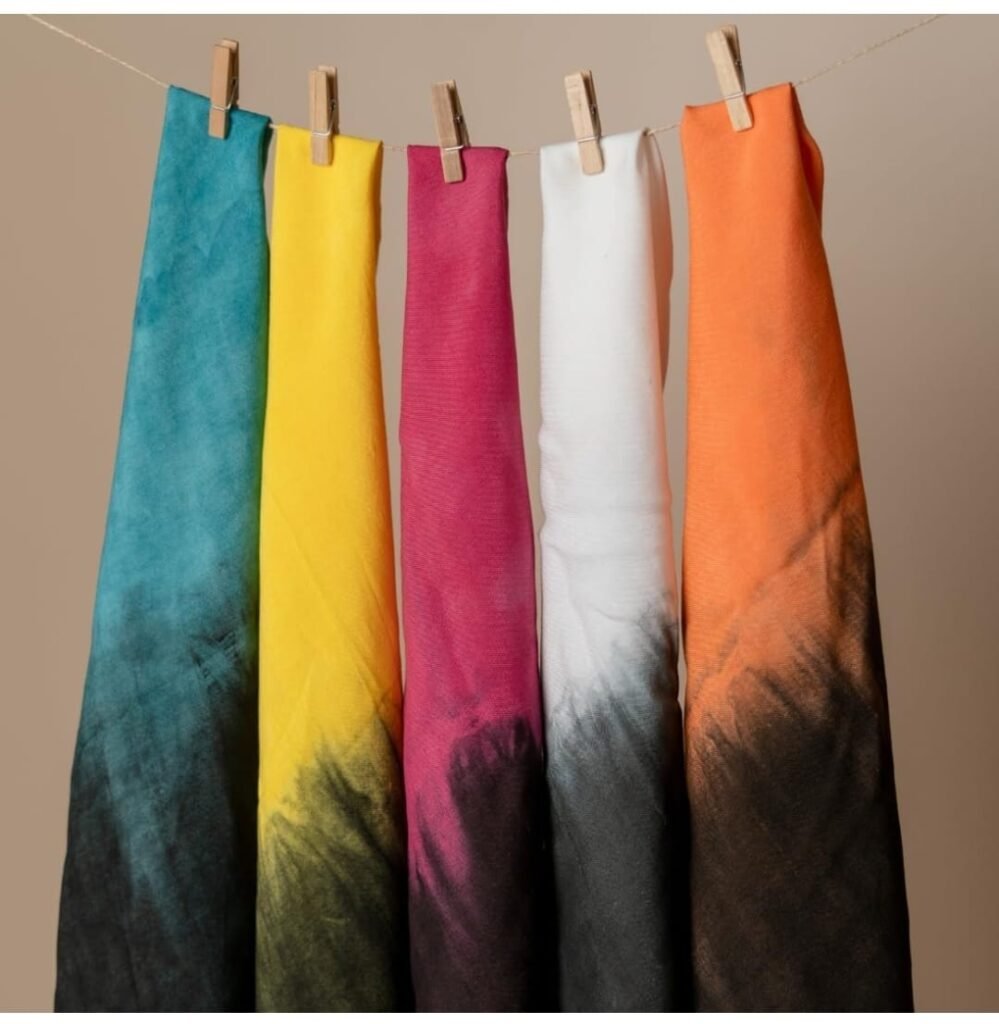
COTTON COLOR DYE PROCESS
The most commonly used processes for imparting color to cotton are piece dyeing and yarn dyeing. In piece dyeing, which is used primarily for fabrics that are to be a solid color, a continuous length of dry cloth is passed full-width through a trough of hot dye solution.
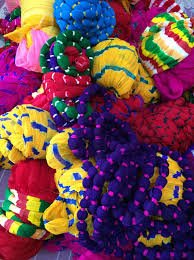
Laheriya Color Dye Process
The traditional Laheriya tie-dye process, originating in Rajasthan, is a meticulous resist-dyeing technique that creates distinctive, colorful wave-like or diagonal striped patterns on fabric.
The Process
The process relies on the dyer’s skill in folding and tying the fabric to resist the dye in certain areas.
- Fabric Preparation: A light-colored, often white, thin cotton or silk fabric is selected and washed to remove any impurities.
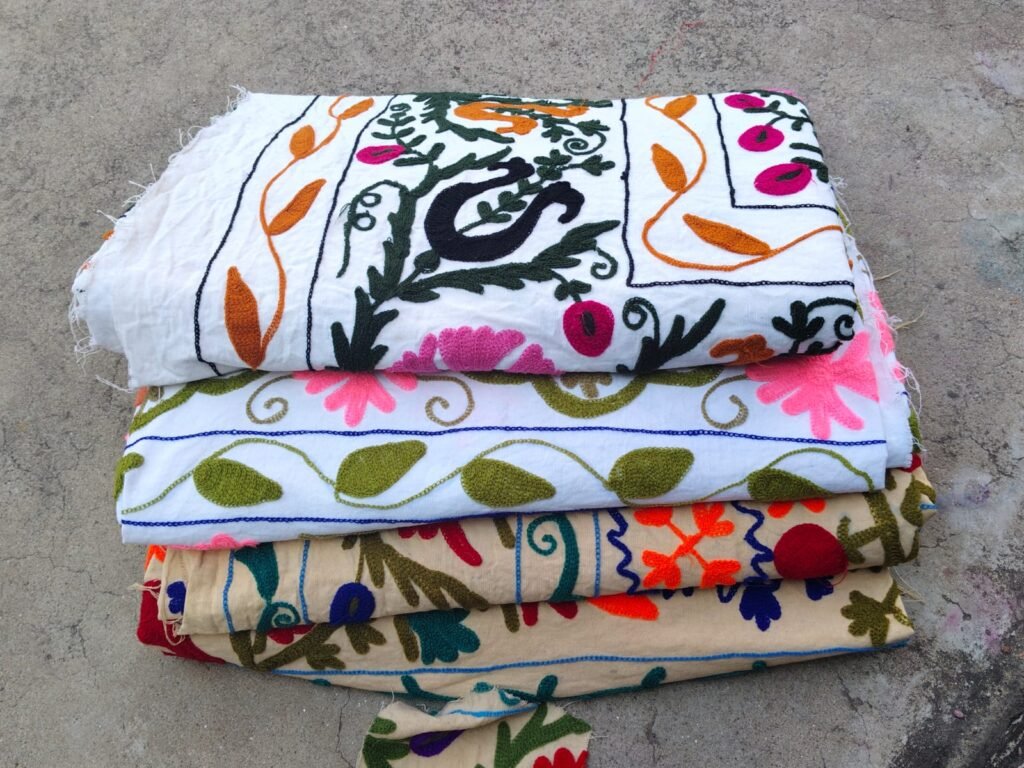
Suzani Dye Process
Dyes for colors like blue, red, yellow, green, and black were created by boiling materials like indigo, madder root, cochineal, saffron, and mixtures of indigo and tree fungus. These natural dyes were mixed with mordants like alum, salt, or vinegar before the fabric was submerged in the vats, which were often located outdoors.

Bandhej And Tie Dye Process
Bandhej and tie-dye . The process includes preparing the fabric, tightly tying it with thread to form designs, and then submerging it in dye. After the fabric is dyed, it is dried and the knots are untied to reveal the intricate patterns.
Step 1: Fabric preparation
- The fabric, often cotton, silk, or chiffon, is pre-washed and bleached to ensure even dye absorption.
- Designs are planned out on the fabric.
Bandhej and tie-dye . The process includes preparing the fabric, tightly tying it with thread to form designs, and then submerging it in dye. After the fabric is dyed, it is dried and the knots are untied to reveal the intricate patterns.
Step 1: Fabric preparation
- The fabric, often cotton, silk, or chiffon, is pre-washed and bleached to ensure even dye absorption.
- Designs are planned out on the fabric.
Step 2: Tying the fabric
- Small portions of the fabric are pinched and tied tightly with thread, or sometimes with a small metal ring.
- The tighter the knots, the sharper the resulting pattern.
- This is an intricate process where artisans tie thousands of tiny knots to create patterns like dots, waves, or floral clusters
- Step 3: Dyeing
- The tied fabric is submerged in vats of natural or synthetic dye.
- The knots act as a resist, preventing the dye from reaching the fabric in those areas.
- Using multiple dips can create a layered effect and enhance vibrancy.
- Step 4: Drying and unwrapping
- The dyed fabric is left to dry completely
Leave a Reply